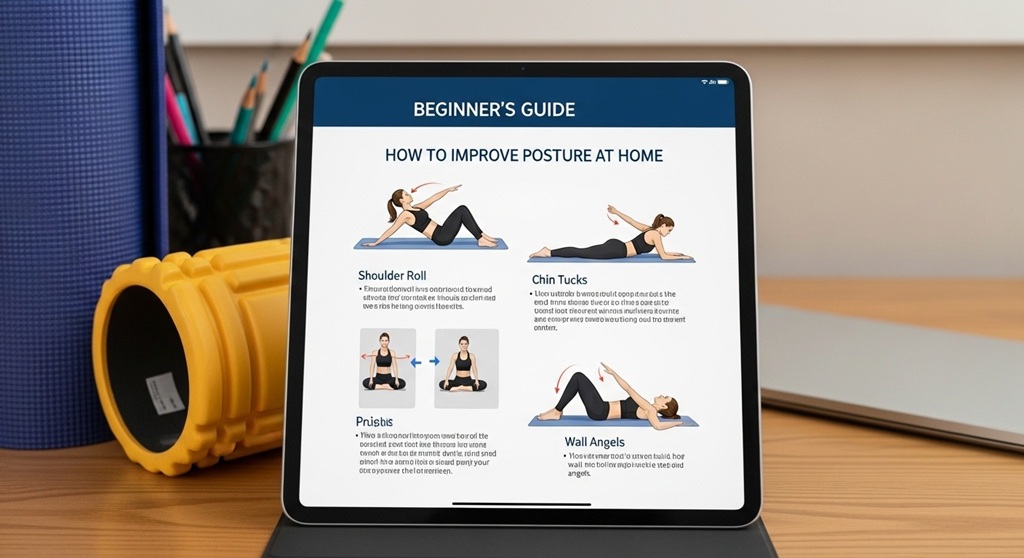
How to Improve Posture at Home (Beginner Guide)
In today’s digital world, where many of us are glued to our screens for hours, poor posture is becoming an increasingly common issue. The good news? Improving posture at home is simple with the right approach. Whether you work from home, study, or spend a lot of time on your phone, small adjustments can make a significant difference. In this beginner’s guide, we’ll explore practical ways to improve your posture at home and eliminate the discomfort caused by slouching.
What Is Good Posture and Why Is It Important?
Good posture refers to the proper alignment of the body, especially when sitting or standing. It means that your bones, muscles, and joints are in their ideal positions, supporting your body in the most efficient way. Maintaining proper posture helps prevent strain on your muscles and joints, improving your overall well-being.
When you maintain good posture, you reduce the risk of chronic pain, particularly in the back, neck, and shoulders. Not to mention, good posture boosts confidence and energy levels. So, let’s dive into how to improve posture at home for a healthier, more comfortable lifestyle.
How Can I Improve Posture While Working From Home?
To improve posture while working from home, follow these key tips:
- Use an ergonomic chair that supports your lower back.
- Ensure your desk is at the correct height to keep your elbows at a 90-degree angle.
- Place your computer screen at eye level to avoid neck strain.
- Take regular breaks to stand, stretch, and move around.
Being at home might tempt you to work from your bed or couch, but that can significantly impact your posture. Instead, create a dedicated workspace with a comfortable chair and desk. This simple change will help you stay aligned throughout the day.
What Are Some Exercises to Improve Posture at Home?
Strengthening exercises and stretches are key to improving posture at home:
- Chest Openers: Stand with feet hip-width apart. Clasp your hands behind your back and gently pull your arms upward while opening your chest. Hold for 30 seconds.
- Shoulder Blade Squeezes: Sit or stand tall, squeeze your shoulder blades together, and hold for 5 seconds. Repeat 10 times to strengthen your upper back.
- Cat-Cow Stretch: On all fours, alternate between arching and rounding your back. This helps to improve spinal flexibility.
Consistent exercises that focus on the chest, back, and shoulders can reduce slouching and make it easier to sit and stand with good posture.
How Does My Sleeping Position Affect My Posture?
Sleeping position plays a significant role in how your body aligns during the night. Poor sleeping posture can lead to back and neck pain the following day. Here’s how you can sleep in a way that supports good posture:
- On Your Back: Place a pillow under your knees to maintain the natural curve of your spine.
- On Your Side: Place a pillow between your knees to align your hips and lower back.
- Avoid Sleeping on Your Stomach: This position can strain your neck and back.
Choosing the right pillow and mattress is just as important. A medium-firm mattress supports better alignment for your spine, and a pillow that cradles your neck helps prevent strain.
What Are Some Common Posture Mistakes at Home?
Slouching, leaning forward, and improper seating are common posture mistakes at home. These issues arise from long hours of sitting and can lead to muscle imbalances and pain. Here’s a breakdown of common mistakes:
- Slouching: Allowing your shoulders to round forward can strain your spine.
- Leaning Forward: Sitting too far forward on your chair forces you to lean forward, causing back strain.
- Crossing Legs: Sitting with your legs crossed for prolonged periods can misalign your hips.
Fixing these habits involves staying aware of your body alignment and making adjustments throughout the day. Setting reminders to correct your posture can go a long way in forming good habits.
How Can I Incorporate Posture-Friendly Habits Into My Routine?
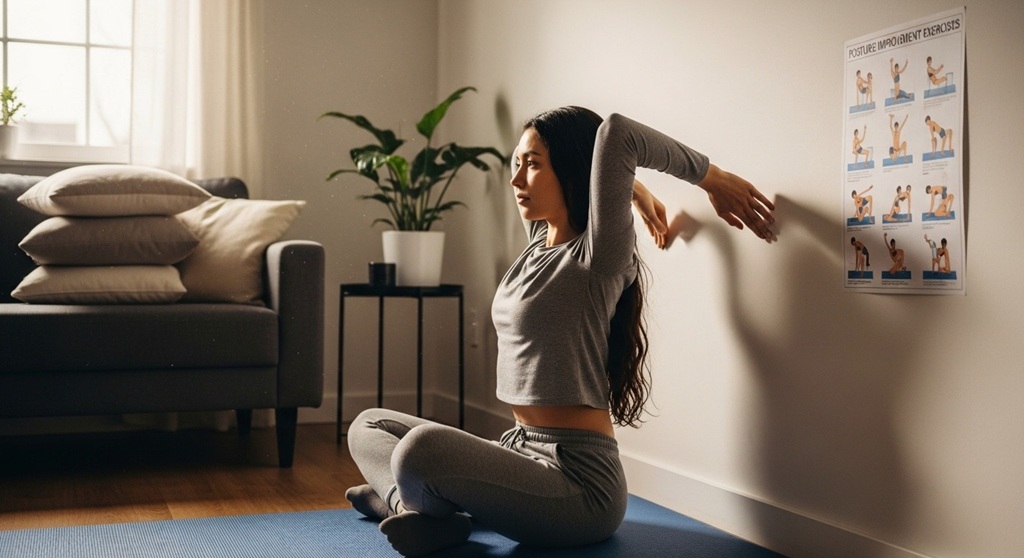
Integrating posture-friendly habits into your daily routine is essential for lasting results. Here are a few simple changes you can make:
- Use a standing desk or adjust your workspace so you can alternate between sitting and standing.
- Practice good posture while using your phone by holding it at eye level and avoiding slouching.
- Engage in mindful posture checks throughout the day to stay aware of your alignment.
By incorporating these habits into your routine, you’ll improve your posture without having to put in extra effort. Small adjustments can make a big impact over time.
How Can I Track My Progress in Improving Posture?
Tracking your progress can help you stay motivated and on track with improving your posture. Here’s how you can do it:
- Posture Apps: Several apps are designed to track your posture throughout the day. These apps use your phone or computer’s camera to analyze your alignment and provide feedback.
- Self-Assessment: Regularly check your posture in the mirror or take photos to see how your alignment improves over time.
- Posture Journal: Keeping a simple journal to note your posture habits can help you become more mindful and track areas for improvement.
Tracking progress allows you to see results, which can help you stay motivated to continue making improvements to your posture.
Conclusion
Improving posture at home is achievable with small, consistent changes. By practicing good posture, doing the right exercises, and making simple adjustments to your workspace and daily routine, you can significantly reduce discomfort and enhance your overall well-being. Remember, it’s all about being mindful of your body alignment and taking action to prevent future strain.
If you’re ready to improve your posture, start with a few of these tips today, and don’t forget to track your progress. Take the first step towards a healthier, pain-free life!
Frequently Asked Questions (FAQ)
1. How can I fix my posture while sitting at a desk?
To fix your posture while sitting, ensure your back is supported by the chair, your feet are flat on the floor, and your screen is at eye level. Avoid slouching and take breaks to stand up and stretch.
2. Can poor posture cause neck pain?
Yes, poor posture can strain the neck muscles, leading to discomfort or even chronic pain. Maintaining proper alignment helps prevent this.
3. How do I prevent slouching while working on a computer?
To prevent slouching, ensure your monitor is at eye level, your back is supported, and your feet are flat on the floor. Take frequent breaks to stretch.
4. Is sitting on an exercise ball good for posture?
Sitting on an exercise ball can engage your core muscles and improve posture, but it should be used with caution. Ensure your desk and chair are still set up ergonomically.
5. Can I improve posture without exercise?
While exercises are beneficial, small adjustments to your seating, sleeping position, and daily habits can also improve posture without requiring intense exercise.
6. How long does it take to improve posture?
Improving posture takes time, but with consistent effort, noticeable improvements can be seen within a few weeks. Keep practicing good habits for long-term results.
7. What is the best pillow for good posture?
A medium-firm pillow that supports the natural curve of your neck is ideal for maintaining good posture during sleep.
Read More Also: Six Tips To Keep Your Ears Healthy
Find out: What Is A Dental Hygienist And Why Should I Go To One?