How Pre-Winter HVAC Cleaning in Columbia TN Eliminates the Burn-Off Odor
Cooler evenings often bring the first furnace cycle of the season, along with a dusty smell that catches homeowners off guard. Months of inactivity can leave fine debris on accessible HVAC surfaces, and that material may produce a brief odor as the system warms. Pre-winter HVAC cleaning can reduce this buildup while helping distinguish an ordinary seasonal smell from something that deserves mechanical attention.
That First Heated-Air Smell Usually Starts With Settled Dust
Summer gives dust plenty of time to collect around registers, return pathways, blower compartments, and other accessible surfaces. Once heating begins, warmer air passes across those areas and can carry the temporary smell of heated dust into occupied rooms.
Typically, a mild seasonal odor fades after the system has operated for a short period. Persistent smoke, melting-plastic smells, electrical odors, or anything resembling fuel requires a different response and should be evaluated by a qualified HVAC professional rather than treated as a simple cleaning problem.
Why Does the Blower Area Matter Before the Furnace Starts Running?
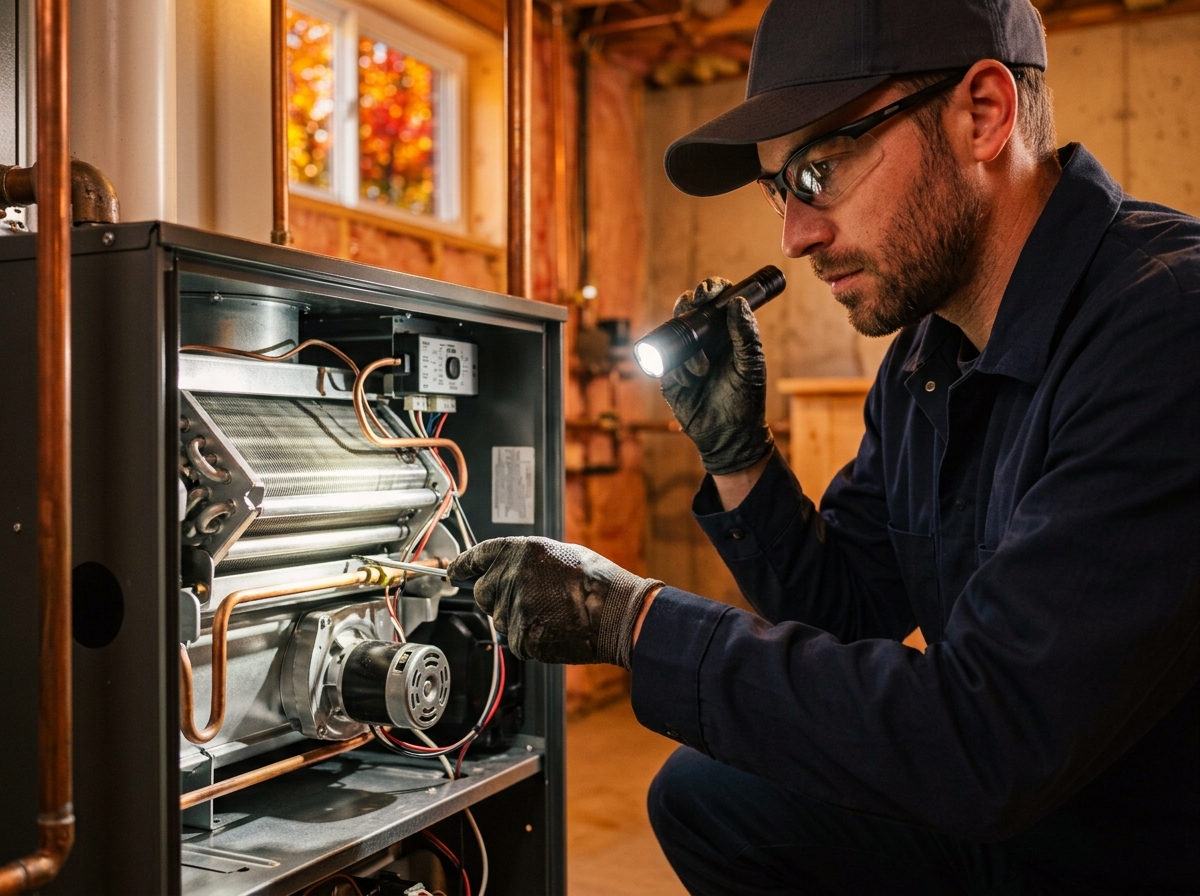
Blower wheels move large volumes of air through the house and may gather lint and fine particles along their curved blades. After a long cooling season, deposits around the wheel or cabinet can become noticeable once heating cycles grow longer and warmer air begins circulating.
Removing accessible buildup before winter gives the blower a cleaner environment in which to operate. Homeowners searching for HVAC cleaning near me should confirm whether blower-area cleaning appears in the service scope, since duct cleaning and direct equipment maintenance are not always included under the same price.
Return Ducts Can Hold Months of Household Debris
Return pathways continuously pull air from bedrooms, hallways, living areas, and other rooms toward the HVAC equipment. Along the way, they can collect carpet fibers, pet hair, pollen, lint, and ordinary dust that settle along trunk surfaces or around large grilles.
Pre-season Columbia HVAC cleaning can address significant accessible buildup when an inspection shows that cleaning is warranted. Because returns feed air back toward the furnace, checking these pathways before winter provides a more complete picture than wiping supply registers and assuming the rest of the system is equally clean.
Cleaning Before Winter Helps Reveal Odors That Dust May Be Hiding
Seasonal dust is only one possible source of an unpleasant smell. Pest debris, damp insulation, overheated components, old smoke residue, or material trapped inside a register can produce odors that become more obvious after the heating system starts.
Inspection helps separate these conditions before technicians begin removing debris. During HVAC cleaning in Columbia TN, camera views and direct checks may uncover staining, disconnected ducts, nesting material, loose insulation, or foreign objects that call for repair or another type of service.
Source Removal Does More Than Freshen Visible Registers
Vacuuming a vent cover may remove what homeowners can see, but it does little for contamination farther inside a branch or main trunk. Professional source removal uses controlled negative pressure to pull loosened debris toward collection equipment while appropriate agitation tools free material from accessible duct surfaces.
Commercial suction also helps keep disturbed particles from spilling into living areas during the work. Compared with simply applying a deodorizer, physical removal addresses the material contributing to the odor instead of temporarily covering its smell with fragrance.
Filters Play a Different Role in Preventing Seasonal Odors
Fresh filters help capture particles moving through the return side of the system once heating begins. Correct sizing is important because gaps around the filter can allow dusty air to bypass the media and travel toward downstream equipment.
Replacement alone cannot remove debris that already sits inside ducts or accessible cabinet areas. Combining suitable filtration with HVAC cleaning gives homeowners a better way to manage both existing buildup and new particles entering the system throughout winter.
Could Moisture Be Behind a Musty Start-Up Smell?
Damp insulation, condensation problems, clogged drainage, or leaks around HVAC equipment can create odors that resemble ordinary stale dust. Moisture concerns require attention because cleaning dry debris will not correct the water source or restore damaged porous material.
Suspected microbial growth also deserves careful evaluation rather than automatic spraying. Qualified technicians should explain whether an affected surface can be cleaned safely or whether wet insulation, drainage problems, or another condition needs separate professional attention first.
Pre-Winter Service Can Reduce Dust Released During Longer Heating Cycles
Cold weather often keeps windows closed while the furnace circulates indoor air for longer periods. Accumulated debris near returns and accessible HVAC surfaces may become more noticeable under those conditions, particularly in homes with pets, recent remodeling, or heavy summer dust.
Scheduling cleaning before regular heating begins allows the work to happen before the system enters its busiest period. Families can then replace filters, finish household dusting, and start the season without immediately mixing old HVAC debris with freshly cleaned room surfaces.
A Burnt Smell Should Never Automatically Be Blamed on Dust
Electrical faults, overheated motors, damaged wiring, belt problems, and failing components can create odors that need immediate mechanical attention. Continued operation should not be used as a way to “burn off” a smell that is strong, unusual, or growing worse.
Safety comes before cleaning whenever technicians find signs of excessive heat or equipment damage. Professional HVAC cleaning supports maintenance, but it cannot replace furnace diagnostics, combustion testing, electrical repair, or other mechanical services needed to keep heating equipment operating safely.
Cleaner Airflow Pathways Give Winter Heating a Better Starting Point
Preparing the HVAC system before colder weather is less about masking that familiar first-use smell and more about removing the buildup that can contribute to it. Inspection and source removal can clear accessible dust while also bringing hidden duct or equipment concerns to light before heating demand rises.
For Columbia homeowners who would rather address the season’s accumulated debris before the furnace starts running every day, Mr. B’s Air Duct Cleaning offers a practical pre-winter service. Their team can clean accessible HVAC pathways, remove the dust that ordinary surface cleaning leaves behind, and help homeowners recognize when an unusual odor points to something that needs attention beyond routine cleaning.