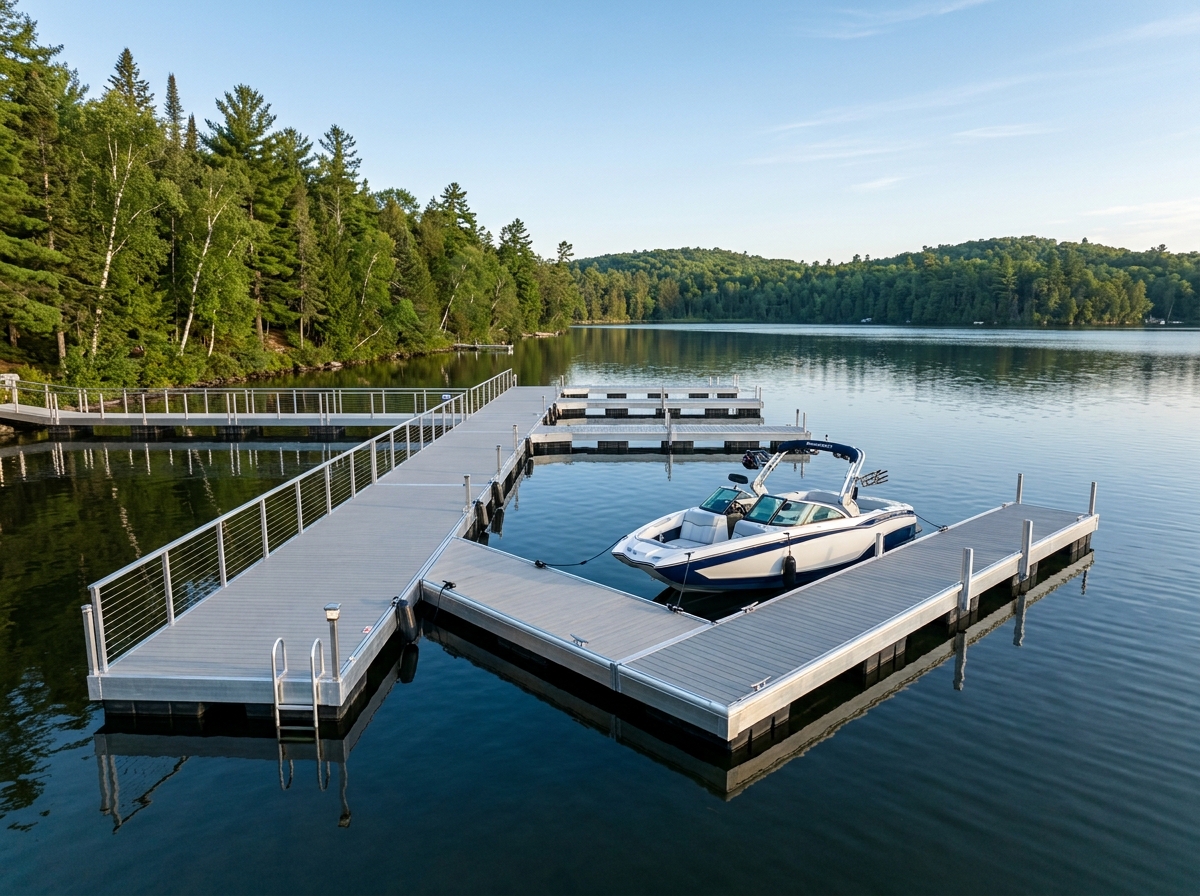
A Practical Look at Aluminum Boat Docks for Sale and Dock Size
Dock size affects far more than appearance. It changes how much room boats have, how people move around the structure, how flotation is distributed, and how the dock responds to wind and waves. Buyers comparing aluminum boat docks for sale should think about the full footprint early. A dock that is too small can feel cramped, while one that is oversized may add unnecessary cost, weight, and anchoring demands.
How to Calculate the Minimum Dock Size Needed for Your Specific Boat
Boat length and beam are the obvious starting points, but clearance matters too. Owners need enough room to approach, tie up, step aboard, and use fenders without squeezing the boat against the structure. A slip that barely matches the hull dimensions may work on paper but feel inconvenient in real use.
A boat dock builder will also consider how the boat is handled. Frequent loading, fueling, fishing gear, or passengers can justify more walking room than a dock used mainly for storage.
Standard Aluminum Section Sizes vs. Custom-Engineered Configurations
Standard dock sections can make planning simpler and may suit straightforward residential properties. Modular pieces can also make delivery and installation easier because the system is assembled from repeatable sections.
Custom layouts become more useful when the shoreline is irregular, several boats need access, or the owner wants a larger platform or unusual slip arrangement. Floating dock builders can combine sections differently to fit those conditions without making the entire structure oversized.
The Impact of Dock Size on Weight Distribution and Flotation Needs
As a dock gets larger, the flotation system has to support more frame, decking, equipment, and people. The important issue is not just total weight but where that weight sits.
An aluminum floating dock with a wide platform may need flotation arranged differently than a long, narrow walkway. Accessories such as storage boxes, ladders, roofs, or seating can also shift loads. Good design keeps the dock from riding low on one side or feeling unbalanced when several people gather in the same area.
Navigating Local Shoreline Regulations and Maximum Footprint Limits
A larger dock is not always allowed simply because the property has enough water frontage. Local authorities, lake associations, or other governing bodies may regulate dock length, width, setbacks, covered areas, or total footprint.
Those rules vary widely, so buyers should check them before finalizing a design. It is much easier to adjust dimensions on a drawing than after materials have been ordered. Property boundaries and neighboring docks may also affect where a larger structure can reasonably sit.
Balancing Deck Space: Walkway Widths vs. Entertainment Platforms
More deck space can make a dock comfortable, but every extra foot should have a purpose. Wide walkways are useful where several people move between boats, while larger platforms make more sense for seating, swimming, or entertaining.
Owners reviewing aluminum docks should think about traffic flow before adding square footage. A slightly wider path in the right location may be more useful than a large platform that rarely gets used. The goal is to put space where people actually need it.
How Total Dock Dimensions Affect Water Resistance and Anchoring Requirements
A bigger dock presents more surface area to wind, waves, and current. That means anchoring becomes more important as the footprint increases.
Long runs can create leverage at connection points, while broad platforms may catch more wind. Experienced floating dock builders consider the full shape of the system when planning anchors, pilings, or other restraints. Water depth and bottom conditions also influence how much movement the dock can safely accommodate.
Size can affect access too. Longer systems may need additional hinges or connection points so different sections can move without placing all the stress on one area.
Future-Proofing Your Purchase: Choosing Modularity for Upsizing Later
Waterfront needs can change. A family may add another boat, want more swimming space, or decide later that a second platform would be useful. A modular dock can make those changes easier if the original frame and connection system were designed with expansion in mind.
Buying extra dock space before it is needed is not always the best use of the budget. In many cases, leaving a practical route for future expansion makes more sense than building the largest possible system on day one.
Flotation Systems gives buyers a way to explore those size and configuration decisions through its residential and commercial all-aluminum dock systems. With options that include floating and fixed layouts, anchoring solutions, ramps, gangways, aluminum decking, and custom configurations, the company can help property owners match dock dimensions to the way their shoreline and boats are actually used.