How to Use a Leg Elevation Pillow for Better Circulation and Recovery
Tired legs, swollen ankles, and restless nights are more common than most people realize. Whether you spend long hours on your feet or sit at a desk all day, your legs carry a heavy burden. The good news is that one simple tool can make a noticeable difference — a leg elevation pillow. This guide explains what it is, how to use it correctly, and why it works so well for your body.
What Is a Leg Elevation Pillow?
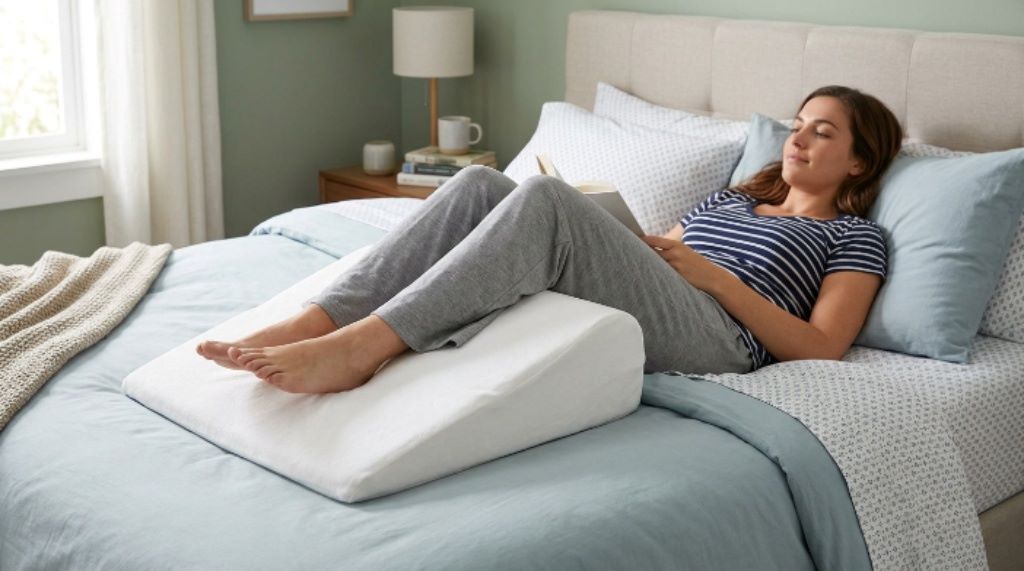
A leg elevation pillow is a specially shaped foam wedge designed to prop your legs above the level of your heart. Unlike a regular pillow stacked under your ankles, an elevation pillow provides consistent, even support along the entire length of your lower legs. Most are made from memory foam or high-density foam and come with a removable, washable cover.
They are widely used by athletes, post-surgery patients, pregnant women, and anyone dealing with leg discomfort. However, you do not need a medical condition to benefit from one. Many people simply use them to feel better after a long day.
How Elevation Helps Your Body
Your heart pumps blood down to your feet with ease. The return journey — pushing blood back up against gravity — requires much more effort from your veins and muscles. When you sit or stand for long periods, blood and fluid tend to pool in the lower legs. This leads to heaviness, aching, and swelling.
Raising your legs above heart level reverses this effect. Gravity now assists the blood on its return path. The veins experience less pressure, and fluid drains more efficiently from the tissues. This is the core principle behind swelling relief and why doctors have recommended leg elevation for decades.
Additionally, when you elevate your legs during sleep, your body can focus its energy on repair and restoration rather than fighting poor circulation. The result is deeper rest and faster physical recovery.
Choosing the Right Leg Elevation Pillow
Not every pillow suits every person. Before you buy, consider a few key factors.
The angle of elevation matters most. A pillow that raises your legs between 30 and 45 degrees is generally ideal for most adults. This range is high enough to promote circulation improvement sleep benefits without placing strain on your hips or lower back.
Firmness is equally important. A pillow that is too soft will compress under your weight and lose its angle. Look for high-density foam that holds its shape throughout the night. Memory foam offers a good balance between support and comfort.
Size is another consideration. The pillow should support your legs from the ankle to just below the knee. A pillow that only supports the ankle can create pressure points and disrupt your sleep.
Finally, check the cover. A breathable, hypoallergenic cover keeps the pillow cool and clean. A zipper allows for easy removal and washing, which is important for long-term hygiene.
How to Position the Pillow Correctly
Correct positioning makes all the difference. Follow these steps for the best results.
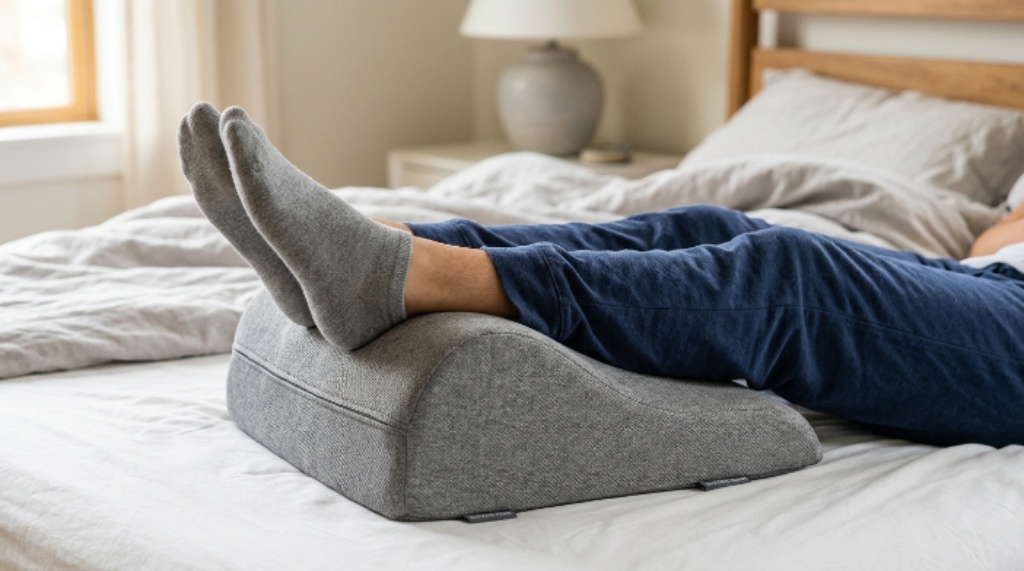
Lie flat on your back on a firm mattress or a comfortable surface. Place the leg elevation pillow under your lower legs so that your calves and ankles rest fully on the pillow. Your knees should have a slight, natural bend — not be locked straight. This reduces strain on the knee joints and keeps the position comfortable.
Your legs should sit noticeably higher than your chest. If your feet are only slightly above the mattress level, the pillow is not providing enough lift. Adjust or add support until you feel the difference.
Avoid lying on your side when using the pillow. Side sleeping with an elevation pillow under both legs is awkward and reduces its effectiveness. Instead, place a standard pillow between your knees if side sleeping is your preference and use the elevation pillow only when lying on your back.
The Best Times to Use a Leg Elevation Pillow
You can use this pillow at various points throughout your day, not just at night.
During sleep is the most effective time. Using it as a recovery pillow overnight gives your body the longest possible window to benefit from improved circulation and reduced fluid buildup. Even four to six hours of elevation can produce noticeable results by morning.
After exercise is another excellent time. Athletes and active individuals often experience muscle soreness and minor swelling in the legs after intense training. Elevating the legs for 20 to 30 minutes post-workout speeds up recovery and reduces next-day stiffness.
After long periods of sitting or standing, a short elevation session of 15 to 20 minutes can relieve the tension and heaviness that builds up during the workday. Therefore, keeping the pillow near your sofa or bed makes it easy to use whenever you need it.
During illness or recovery from surgery, a leg elevation pillow becomes especially valuable. It reduces swelling, lowers the risk of blood clots in some cases, and keeps you more comfortable during extended bed rest. However, always follow your doctor’s specific instructions during medical recovery.
Common Conditions That Benefit Most
A leg elevation pillow is helpful for a wide range of people. Some conditions respond particularly well to regular use.
- Varicose veins — Elevation reduces the pressure on weakened vein walls and eases discomfort.
- Edema — Fluid retention in the lower legs drains more easily when the legs are raised.
- Deep vein thrombosis prevention — Elevation encourages blood flow and reduces clot risk during long periods of rest.
- Plantar fasciitis — Raising the feet overnight can reduce morning heel pain.
- Pregnancy — Swollen ankles and leg cramps are very common in the third trimester. A leg pillow offers gentle, drug-free relief.
- Post-surgical recovery — Orthopedic surgeries, particularly those on the knee or ankle, almost always involve a period of leg elevation.
Additionally, people who travel frequently or sit for long flights often return home with puffy ankles. Using a leg pillow in the days following long travel helps restore normal circulation more quickly.
Tips for Getting the Most Out of Your Pillow
A few small habits can significantly increase the benefits you get from regular use.
Stay hydrated. Dehydration thickens the blood and makes circulation harder. Drinking enough water throughout the day supports the work your body does during elevation.
Combine elevation with gentle movement. Light foot and ankle circles while your legs are elevated can further stimulate blood flow. This takes just a minute or two and adds a meaningful boost.
Be consistent. One night of elevation will help, but regular use is what produces lasting change. Try to use the pillow every night for at least two weeks and note how your legs feel each morning.
Keep the pillow clean. Foam absorbs moisture over time. Air the pillow out regularly and wash the cover at least once a week. A clean pillow also lasts longer and stays more hygienic.
What to Expect in the First Few Weeks
Many people notice a difference within the first few nights. Morning swelling tends to reduce first. The heavy, achy feeling that builds up during the day may also start to feel less intense. However, results vary depending on the underlying cause of your symptoms.
If you have chronic venous insufficiency or another medical condition, elevation alone may not resolve your symptoms completely. In that case, use the pillow as part of a broader care plan that includes compression socks, regular walking, and medical guidance.
For healthy individuals using the pillow for general comfort, circulation improvement sleep benefits are often felt within one to two weeks of consistent use. The key is patience and consistency.
Conclusion
A leg elevation pillow is a simple, affordable, and highly effective tool for anyone who wants to feel better in their legs. By raising your legs above heart level, you take pressure off your veins, reduce fluid buildup, and give your body the conditions it needs to recover. Whether you use it as a recovery pillow after exercise, as a swelling relief aid after a long day, or simply to sleep more comfortably, the benefits are real and well supported by both science and everyday experience.
The steps are straightforward — choose the right pillow, position it correctly, and use it consistently. Over time, this small habit can make a meaningful difference to your comfort, your circulation, and your overall quality of rest. Your legs work hard for you every day. A little elevation goes a long way in giving them the care they deserve.
Frequently Asked Questions
How long should I keep my legs elevated each day?
For general comfort and swelling relief, 20 to 30 minutes two or three times a day is effective. For overnight use, sleeping with your legs elevated for a full night’s rest produces the best results over time.
Can I use a regular pillow instead of a leg elevation pillow?
You can prop your legs on a regular pillow, but it compresses quickly and loses its angle. A dedicated elevation pillow maintains a consistent height and provides better support for the full length of your lower legs.
Is it safe to use a leg elevation pillow every night?
Yes, for most healthy adults it is completely safe to use every night. However, if you have a medical condition such as heart disease or venous insufficiency, speak with your doctor first to confirm that elevation is appropriate for your situation.
Will a leg elevation pillow help with varicose veins?
It can help reduce the discomfort associated with varicose veins by relieving pressure in the leg veins. However, it does not treat or reverse the veins themselves. For medical treatment of varicose veins, consult a vascular specialist.
What is the ideal elevation angle for circulation and recovery?
An angle between 30 and 45 degrees above the heart is generally recommended. This range is sufficient to assist blood return without causing discomfort in the hips, knees, or lower back.
Related Topics:
How to Improve Blood Circulation Using a Wedge Pillow
What Is the Impact Factor of SSM – Health Systems?