
Somatic Therapy: A Path to Healing Intergenerational Trauma in Asian American Communities
Key Takeaways
- Intergenerational trauma is prevalent in Asian American communities due to historical, cultural, and familial factors.
- Somatic therapy provides a holistic approach by addressing both physical and emotional aspects of trauma.
- Cultural sensitivity is essential to effective trauma therapy within Asian American populations.
- Despite its promise, somatic therapy faces barriers such as stigma and limited access to culturally informed care.
- Personal stories and case studies demonstrate the transformative potential of somatic therapy for intergenerational healing.
Understanding Intergenerational Trauma
Throughout the history of Asian American communities, many families have carried the weight of traumatic experiences—whether from colonization, war, forced migration, or sociopolitical exile. These deeply rooted events do not simply end with one generation. Instead, their impacts reverberate through time, manifesting in family dynamics and individual well-being. This phenomenon, known as intergenerational trauma, is not solely psychological; it is often expressed in the body through patterns of anxiety, chronic stress, and emotional suppression.
Many Asian Americans grow up in environments shaped by unspoken rules around emotional restraint, maintaining family honor, and prioritizing collective survival over individual needs. While these values helped previous generations endure hardship, they can also create environments in which expressing vulnerability is discouraged, making it challenging for individuals to recognize or articulate the effects of trauma. Addressing this intricate interplay requires a comprehensive therapeutic approach, and increasingly, Asian-American trauma therapy is turning to somatic modalities to break these cycles of inherited pain. These body-centered therapies help individuals reconnect with sensations, release stored tension, and rebuild their sense of safety. Therapists create healing space that honors individual experiences and ancestral resilience by integrating cultural sensitivity with somatic awareness. Over time, this process fosters greater emotional freedom, empowering Asian Americans to redefine strength—not as silence, but as the courage to feel, heal, and speak their truth.
The Role of Somatic Therapy
Somatic therapy is a holistic therapeutic approach that explores the profound connection between the body and mind, especially in the context of trauma healing. Unlike traditional talk therapy, which focuses primarily on thoughts and narratives, somatic therapy acknowledges that trauma often resides in the body as physical sensations, patterns of tension, and disruptions in the nervous system. This is especially relevant in cases of intergenerational trauma, where symptoms like chronic pain, fatigue, muscle stiffness, digestive issues, or anxiety can manifest without a clear emotional cause.
Somatic therapists help individuals build awareness of how their bodies respond to stress, using tools such as breath awareness, mindful movement, body scanning, and somatic dialogue. These practices gently invite clients to explore and safely release stored trauma in a way that words alone cannot access. The therapeutic relationship is key, offering a safe, supportive space for transformation. Over time, clients cultivate a greater sense of inner safety, emotional regulation, and resilience, allowing them to reconnect with their bodies and experience life with renewed clarity and empowerment.
Benefits of Somatic Therapy for Asian Americans
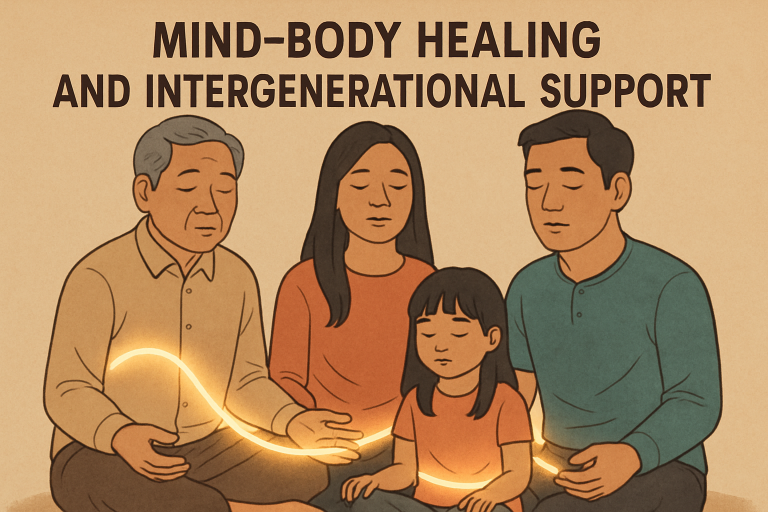
For Asian Americans, somatic therapy offers a culturally resonant way to heal because it addresses both visible and invisible wounds. Traditional Asian philosophies such as Qi (life energy) and mind-body harmony align naturally with the principles of somatic psychology. By working with the body, individuals bypass some of the cultural discomfort associated with discussing trauma explicitly.
Emotional Regulation and Self-Awareness
One of the most profound benefits of somatic therapy is improved emotional regulation. Learning to interpret bodily signals enables clients to recognize when they are experiencing anxiety, sadness, or anger, often before these emotions become overwhelming or disruptive. This creates space for mindful responses rather than automatic, conditioned reactions rooted in familial patterns.
Stress Reduction and Nervous System Balance
Intergenerational trauma often manifests in chronic hypervigilance or a “fight-or-flight” response. Through mindfulness, deep breathing, and orienting exercises, somatic therapy helps to recalibrate the nervous system. Clients find themselves more present, calmer, and able to recover quickly from stress.
Relationship Repair and Boundary Setting
Familial expectations and unspoken obligations are familiar sources of stress in Asian American families. Somatic therapy empowers individuals to recognize bodily signals that arise in challenging interactions and to set boundaries that promote healthier, more authentic connections. Healing personal trauma ripples outward, creating shifts in family systems and intergenerational communication.
Incorporating Cultural Sensitivity
Effective trauma therapy for Asian Americans demands more than clinical skill with somatic methods—it calls for deep cultural humility, sensitivity, and awareness of the nuanced values many clients bring into the therapeutic space. Key concepts such as filial piety, collectivism, and emotional restraint are often deeply rooted in lived experience and intergenerational messaging. These cultural norms can affect how individuals interpret symptoms, express emotions, or even decide whether to seek help. Therapists who acknowledge these dynamics are better equipped to build trust, create a safe therapeutic alliance, and help clients feel seen without judgment.
Culturally sensitive care may involve integrating metaphors from clients’ heritage, respecting communication preferences shaped by language or upbringing, or weaving in ancestral and migration narratives to contextualize emotional experiences. Therapists might also invite practices such as storytelling, cultural rituals, or family mapping to explore identity and belonging. Recognizing the intersection between trauma and cultural identity allows for a more holistic healing process—one that not only addresses pain but also reinforces pride, resilience, and the reclaiming of one’s authentic voice in a complex cultural landscape.
Case Studies and Success Stories
Lived experiences and clinical case studies best illustrate the effectiveness of somatic therapy for Asian Americans. Individuals and families engaged in somatic work often report breakthroughs that ripple beyond themselves.
In one documented story, a Chinese American woman sought help for persistent anxiety and physical symptoms she could not explain. Traditional therapy had reached a plateau, but through somatic interventions, she discovered that her anxiety was tied to deep-seated fears around disappointing her parents and failing to meet cultural expectations. Using somatic awareness, she learned to self-soothe through breathwork in stressful family moments, eventually reporting less anxiety, improved sleep, and more open communication with her parents.
Another case involved a family who emigrated from Vietnam, experiencing the trauma of war and loss. Years later, their adult children faced unexplained panic attacks and hypervigilance. Working with a culturally sensitive somatic therapist, the family explored how their bodies “remembered” what their minds had learned to silence. Exposing these patterns in a safe, nonjudgmental space led to greater empathy, mutual understanding, and a capacity for self-compassion.
Challenges and Considerations
While somatic therapy is an invaluable approach, it is not without significant challenges in Asian American communities. The cultural stigma surrounding mental health often acts as a barrier to seeking any form of therapy. Fears of appearing weak or “airing dirty laundry” outside the family can deter individuals from reaching out for support. Even when the need for help is acknowledged, finding a culturally competent, trauma-informed somatic therapist presents a further challenge due to the underrepresentation of Asian American therapists in the field.
To address these barriers, mental health organizations and community leaders advocate for increased training, outreach, and education around culturally responsive care. Efforts include workshops, support groups, and the creation of directories that highlight therapists well-versed in the unique dynamics of Asian American communities. There is also a growing movement within Asian American circles to deconstruct harmful narratives around emotional vulnerability, encouraging open dialogue about mental health and resilience.
Resources and Support
A wide range of resources can provide invaluable support and direction for those interested in learning more or beginning their journey with somatic therapy. Books like Asian American Psychology and Psychotherapy: Intergenerational Trauma, Betrayal, and Liberation explore the cultural context of trauma and the paths toward healing unique to Asian American communities. These texts offer clinical insights and personal narratives that resonate deeply with individuals navigating inherited emotional patterns. In addition, online directories are expanding to include culturally informed therapists who understand the intersection of heritage, identity, and somatic healing. These directories make it easier to find professionals who are not only trained in body-based methods but also attuned to the nuances of cultural experience.
Virtual alternatives are proliferating for individuals who may not have access to in-person therapy due to cost, location, or time constraints. Webinars, digital workshops, and self-paced courses introduce foundational somatic practices that can be incorporated into daily routines. These options foster greater emotional literacy and body awareness, helping more people begin their healing journey in accessible, empowering ways.
Conclusion
Intergenerational trauma within Asian American communities is a multifaceted issue shaped by colonialism, war, migration, systemic racism, and cultural silence. These deeply rooted experiences often manifest not just emotionally, but also physically—showing up as chronic tension, anxiety, or unexplained fatigue. Somatic therapy offers a powerful avenue for healing by helping individuals reconnect with their bodies and recognize how past experiences are stored and expressed through physical sensations. Through this body-centered approach, clients can gently release trauma that words alone may not reach. The practice bridges the gap between mind and body, allowing individuals to process generational pain in a safe and embodied way. This healing is personal and generational—breaking cycles of suppression and disconnection that often go unspoken. Culturally sensitive, trauma-informed care ensures that this journey respects the individual’s identity, family history, and values. As more Asian Americans engage with somatic practices, they reclaim their personal narratives and lay the foundation for stronger, more resilient future generations rooted in awareness, dignity, and healing.